14 Day Framework
Why Most Hospitals Lose Revenue Before a Claim Is Ever Created
A physician-led framework to identify hidden revenue leakage across clinical, operational, and financial workflows before it becomes write-offs, denials, or missed reimbursement.
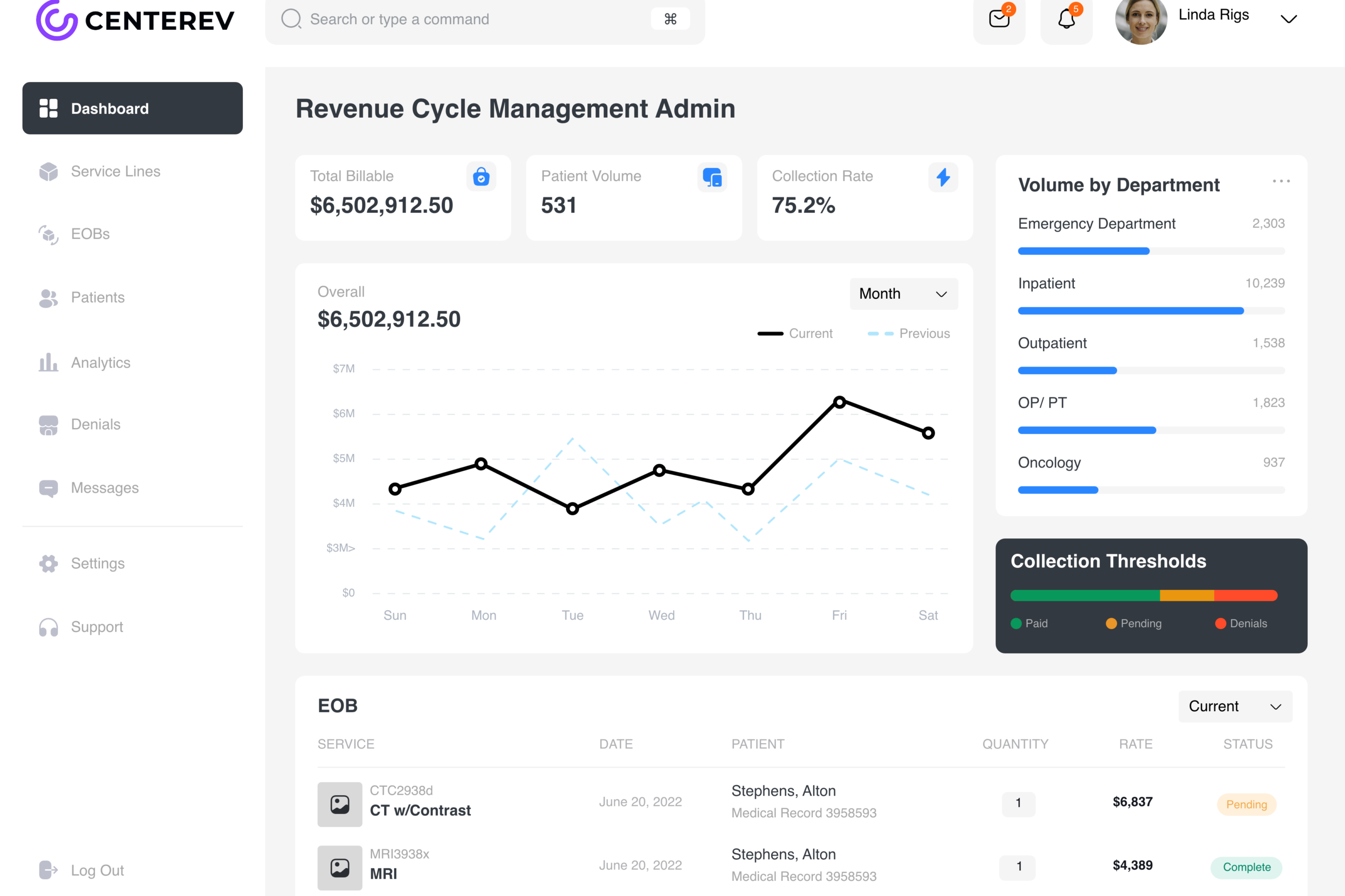
The Revenue Problems Most Hospitals Never Measure
——————————
Missed Charges
Services are performed every day that never make it into the bill due to workflow gaps, delayed orders, or documentation failures.
Operational Delays
Patient throughput issues, discharge delays, and poor handoffs often create downstream financial loss that never appears in denial reports.
Documentation Gaps
Incomplete or inconsistent physician documentation reduces coding specificity, acuity, and reimbursement.
The “Invisible” Loss
Most organizations know their denial rate. Few know how much revenue was lost before billing ever began.
Most hospitals optimize the claim. Very few measure what never became a claim.
That is where some of the largest revenue losses occur.
Missed services never billedDocumentation that weakens reimbursementOperational delays that suppress revenue
5 Ways Revenue Leaks Before a Claim Exists
Common Sources of Hidden Revenue Loss
1) Missed or delayed charge capture
2) Weak physician documentation
3) Throughput and discharge bottlenecks
4) Services performed but not billed
5) Variance between expected and actual reimbursement
These issues usually sit between departments — clinical, operations, coding, and billing — which is why they are rarely identified by traditional revenue cycle reviews.
Where Centerev Looks First
Most organizations already possess the data needed to identify revenue leakage. The challenge is knowing where to look and how to connect the patterns.
Clinical Documentation
We review physician documentation, coding patterns, and clinical specificity to identify where reimbursement is being reduced upstream.
Operational Workflow
We evaluate throughput delays, missed orders, discharge lag, handoff failures, and process breakdowns that quietly suppress revenue.
Financial Variance Analysis
We compare expected reimbursement against actual collections to identify where money is being lost and quantify the opportunity.
Hospitals Do Not Need More Reporting. They Need Recoverable Revenue.
The goal is not another dashboard. The goal is to identify where money is being lost, quantify the opportunity, and prioritize the fixes with the highest return.
30%
15-30% potential reduction in avoidable denials after upstream issues are corrected
5%
2-5% improvement in net reimbursement often found through documentation and charge capture review
100K+
Typical annualized revenue opportunity identified in mid-sized organizations
14
14 days for the initial Revenue Recovery Sprint
Actual results vary based on organization size, payer mix, specialty mix, and current operational maturity.
How the Revenue Recovery Sprint Works
1
Data Review
We review a focused set of existing reports, including denials, charge capture, documentation, throughput, and reimbursement variance.
2
Leakage Mapping
We identify where revenue is being lost across departments and determine which issues are creating the largest financial impact.
3
Financial Estimate
We estimate the amount of recoverable revenue and prioritize the highest-value opportunities.
4
Action Plan
You receive a concise roadmap showing where to focus first, what can realistically be recovered, and which fixes are likely to produce the fastest return.
You May Already Have the Revenue You Need
The issue may not be patient volume, payer mix, or another billing vendor. It may be hidden inside the workflows your organization has learned to accept.
FAQ
We conduct a focused 14-day review of existing operational, documentation, coding, and financial data to identify where reimbursement is being lost before claims are created.
Most organizations already have the necessary information. Typical inputs include denial reports, charge capture data, physician documentation samples, throughput metrics, and reimbursement reports.
No. The initial review uses data and systems your organization already has. If additional monitoring tools make sense later, those can be discussed separately.
Hospitals, physician groups, surgical centers, and health systems experiencing stagnant reimbursement, rising denials, or unexplained financial performance gaps.
Most organizations can begin within one to two weeks after an introductory discussion and receipt of the initial data set.
Traditional consultants usually focus on claims after revenue is already lost. Centerev looks upstream — across clinical, operational, and financial workflows — to identify what never became a claim at all.
Missed services never billed
Change the color to match your brand or vision, add your logo, choose the perfect layout, modify menu settings, add animations, add shape dividers, increase engagement with call to action and more.
Operational delays that suppress revenue
Change the color to match your brand or vision, add your logo, choose the perfect layout, modify menu settings, add animations, add shape dividers, increase engagement with call to action and more.
Documentation that weakens reimbursement
Change the color to match your brand or vision, add your logo, choose the perfect layout, modify menu settings, add animations, add shape dividers, increase engagement with call to action and more.